
Self-Employed vs Incorporated: When Does It Make Sense to Incorporate?
A practical guide for Canadian freelancers, consultants, doctors and small business owners deciding whether self-employed or incorporation is the right structure for them.

Every year, thousands of freelancers, consultants, doctors and small business owners compare being self-employed vs incorporated in Canada. The right choice depends on far more than income alone—it also involves taxes, personal cash needs, legal liability, compliance costs, and long-term plans for the business.
The debate around self-employed vs incorporated touches on taxes, legal liability, personal remuneration, and long-term business growth. Incorporating too early can introduce unnecessary complexity and administrative burden. Waiting too long, however, can mean overlooking planning opportunities that become more valuable as a business grows.
In this guide, we explain the key differences between operating as a sole proprietor and through a corporation, the practical factors that matter most, and why an Ottawa–Gatineau business owner needs advice tailored to their province of residence.
One Entity or Two: The Legal Difference That Changes Everything
Before any tax conversation begins, there is a more fundamental question: are you and your business one legal entity, or two?
As a sole proprietor, you and your business are the same person in the eyes of the law. Your business income flows directly onto your personal T1/TP-1(QC) return through Form T2125/TP-80-V(QC). Contracts, business debts, and legal claims connected to the business can therefore affect you personally. There is no legal wall separating personal finances from business obligations.
Incorporation changes that structure. A corporation is recognized as a separate legal person: it can own assets, enter contracts, borrow money, and file its own T2/CO-17(QC) corporate income tax return. You own shares in the corporation rather than operating the business personally.
Registering a business or trade name does not create a separate legal entity. If you are operating as a sole proprietor, you remain personally connected to the business regardless of the name shown on your invoices.
The liability protection offered by a corporation is meaningful but not absolute. Personal loan guarantees, specific director obligations, poor corporate recordkeeping, and misconduct can still create personal exposure. A corporation should also be supported by appropriate insurance, separate banking, and proper corporate housekeeping.
How You Are Taxed as a Sole Proprietor
When you operate as a sole proprietor, the CRA does not distinguish between you and your business. After allowable expenses, net business income is reported on your personal T1/TP-1 return through Form T2125/TP-80-V and is taxed alongside your other personal income.
The Weight of Personal Marginal Rates
Canada’s personal income tax system is progressive. As income rises, higher portions of income are taxed at higher federal and provincial marginal rates. In Ontario and Quebec, combined top marginal rates can exceed 50% at higher income levels. Review the current federal personal income tax rates and brackets and remember that provincial tax applies in addition to federal tax.
The Hidden Cost: Paying Both Sides of CPP
A self-employed individual generally pays both the employee and employer portions of CPP contributions because there is no employer to cover the other share. This cost is separate from personal income tax and should be included in any self-employed vs incorporated comparison.
CPP calculations depend on annual contribution limits and may include CPP2 at higher income levels. Before relying on an estimate, confirm current figures directly through CRA’s CPP contribution rates and maximums .
No Deferral, No Buffer
The core structural limitation of a sole proprietorship is that business profit is generally taxed personally in the year it is earned. There is no corporate account in which to retain after-tax business earnings at a lower initial tax rate for future business use, investment, debt repayment, or planned personal withdrawals.
How You Are Taxed as a Corporation
Once incorporated, the corporation becomes a separate taxpayer and files its own T2/CO-17 corporate tax return. Corporate income is taxed within the corporation, while you are generally taxed personally only when money is paid to you, commonly as salary, dividends, or a combination of both.
Corporate Tax Rates: A Meaningful Reduction
A Canadian-Controlled Private Corporation that qualifies for the Small Business Deduction may be eligible for the reduced federal 9% rate on qualifying active business income up to the applicable business limit. Provincial tax is then added, so the combined rate varies between Ontario, Quebec, and other provinces.
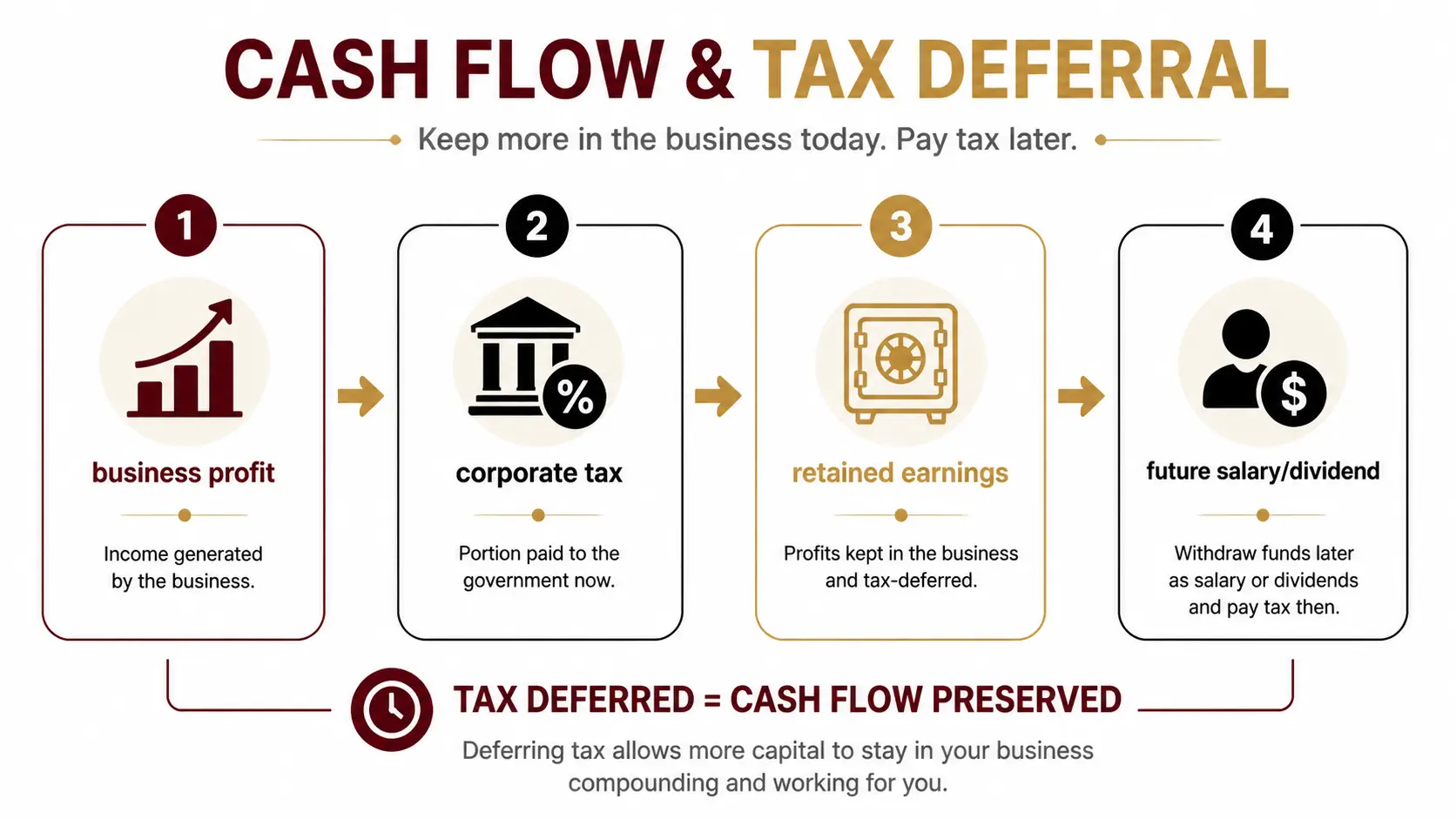
The lower corporate rate is not a permanent tax elimination. It can, however, create a deferral opportunity where profit remains in the corporation instead of being immediately withdrawn for personal spending. You can verify the current rules on the CRA’s corporation tax rates page .
The Deferral Advantage Explained
After the corporation pays corporate income tax, remaining cash can be retained for working capital, reinvestment, debt reduction, future opportunities, or later personal withdrawals. Personal tax generally arises when funds are extracted from the corporation.
The key question is not simply how much you earn. It is how much of your profit you need personally each year. The deferral opportunity is most relevant when meaningful after-tax earnings can remain in the corporation.
Self-Employed vs Incorporated: A Side-by-Side Breakdown
This self-employed vs incorporated comparison outlines the key differences between operating as a sole proprietor and operating through a Canadian-Controlled Private Corporation.
| Factor | Sole Proprietor | Incorporated (CCPC) |
|---|---|---|
| Legal structure | Owner and business are one entity | Corporation is a separate legal person |
| Tax filing | T1/TP-1 personal return with Form T2125/TP-80-V | T2/CO-17 corporate return plus personal T1/TP-1 |
| Tax rate on business income | Personal marginal rate, potentially exceeding 50% at higher income levels | Potentially lower initial corporate rate on qualifying retained active business income |
| CPP obligations | Generally both employer and employee portions | Depends on salary versus dividend remuneration strategy |
| Personal liability | Generally unlimited | Limited-liability structure, subject to important exceptions |
| Administrative burden | Lower | Higher ongoing compliance requirements |
Legal Structure and Liability
A corporation can create important legal separation, but it is not a substitute for insurance or responsible business practices. Personal guarantees, unpaid source deductions, GST/HST or QST issues, and inadequate corporate records can still create personal risk.
Tax Filing and Rates
Incorporation adds a corporate tax return, annual records, and bookkeeping requirements. In return, qualifying businesses may gain flexibility over the timing and form of personal remuneration.
CPP and Remuneration
Salary generally creates CPP contributions and RRSP room. Dividends generally do not. The right approach depends on cash needs, retirement plans, lending requirements, and broader tax planning.
Compliance Costs
Corporate returns, annual filings, minute book maintenance, payroll where applicable, and disciplined bookkeeping create real recurring costs. These should be weighed against the potential tax and legal benefits.
The Question Everyone Asks: When Does It Actually Make Sense to Incorporate?
There is no universal profit level at which incorporation automatically becomes the right answer. A range such as $50,000 to $80,000 in annual net business income can be a useful starting point for a discussion, but it does not replace an analysis of your actual cash flow and circumstances.
It Is Not Just What You Earn — It Is What You Keep Inside
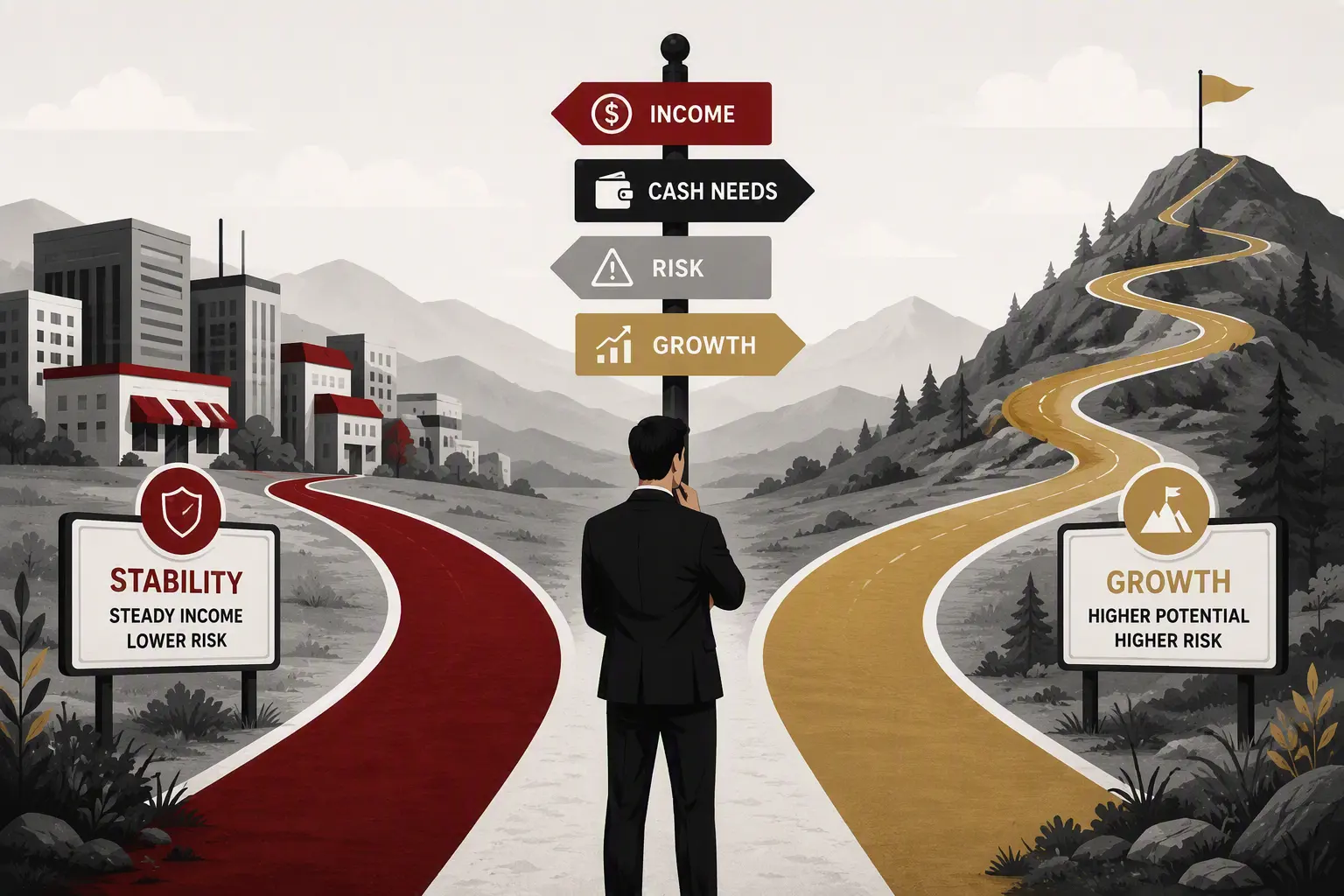
The central planning variable is how much profit you need to withdraw for personal expenses. If most of the business profit must be taken out every year to fund your lifestyle, the deferral opportunity may be limited. If you can consistently leave meaningful after-tax earnings in the company, incorporation may become more compelling.
Liability Protection Changes the Math
Liability exposure deserves its own analysis. Construction, consulting, professional services, and project-based businesses may carry risks that justify exploring incorporation even where the immediate tax deferral is modest. A lawyer and CPA can help assess the legal and tax dimensions together.
Future Goals: The LCGE Opportunity
Owners who expect to sell a business one day should consider corporate structure early. A sale of qualifying small business corporation shares may qualify for the Lifetime Capital Gains Exemption, subject to detailed ownership, asset-use, and holding-period conditions. It is not available on the sale of a sole proprietorship as such, and eligibility should be planned well before a sale is expected.
The Ottawa–Gatineau Reality: Why Province of Residence Changes the Math

National content often discusses incorporation as though Canada were one tax environment. For Ottawa–Gatineau entrepreneurs, that can produce an incomplete picture because Ontario and Quebec have different provincial tax systems, filing obligations, and compliance requirements.
Two Provinces, Different Outcomes
Provincial personal and corporate tax rates affect the after-tax result of both salary and dividends. An owner in Gatineau and an owner in Ottawa can earn the same amount from the same business yet have different tax outcomes.
Quebec’s Dual Filing Structure
Quebec corporations generally file a federal T2 return with CRA and a provincial CO-17 return with Revenu Québec. Quebec individuals file a federal T1 and a provincial TP-1 return.
GST/HST, QST, CPP and QPP
Ontario and Quebec business owners encounter different sales tax and payroll systems. Quebec businesses may need to manage QST alongside GST, while Quebec residents generally contribute to QPP rather than CPP.
A Dual-Jurisdiction Perspective
A local analysis should account for where you live, where the business operates, the location of employees and customers, and the provincial tax filings that apply to your specific structure.
What Incorporation Actually Costs: The Honest Version
Incorporation comes with real upfront and annual costs. The question is not whether those costs exist, but whether the tax deferral, liability considerations, business-growth goals, and potential future exit planning justify them in your situation.
Upfront Costs to Get Started
Incorporation costs vary depending on whether you use a provincial or federal registry, whether legal assistance is required, and whether there are multiple shareholders. A properly drafted shareholder agreement is often especially valuable where more than one person will own shares.
Recurring Annual Compliance Costs
An incorporated business typically requires a T2/CO-17 corporate return, structured bookkeeping, annual corporate records, potential payroll compliance, and professional advice on remuneration. Quebec corporations also face an additional provincial corporate tax return and may have separate QST compliance.
Compare projected tax deferral against the complete annual cost of the corporation: accounting fees, bookkeeping, corporate filings, legal record maintenance, payroll administration, sales tax returns, and your own time. A tax saving that exists only before compliance costs is not a complete answer.
The Cost of Neglecting Corporate Housekeeping
A corporation must be operated as a distinct entity. Separate bank accounts, clear documentation of shareholder loans, current minute-book records, and proper resolutions are not optional details. Neglecting them can create tax consequences, legal exposure, and costly remediation work.
Salary vs Dividend: A Plain-Language Primer for New Incorporated Owners
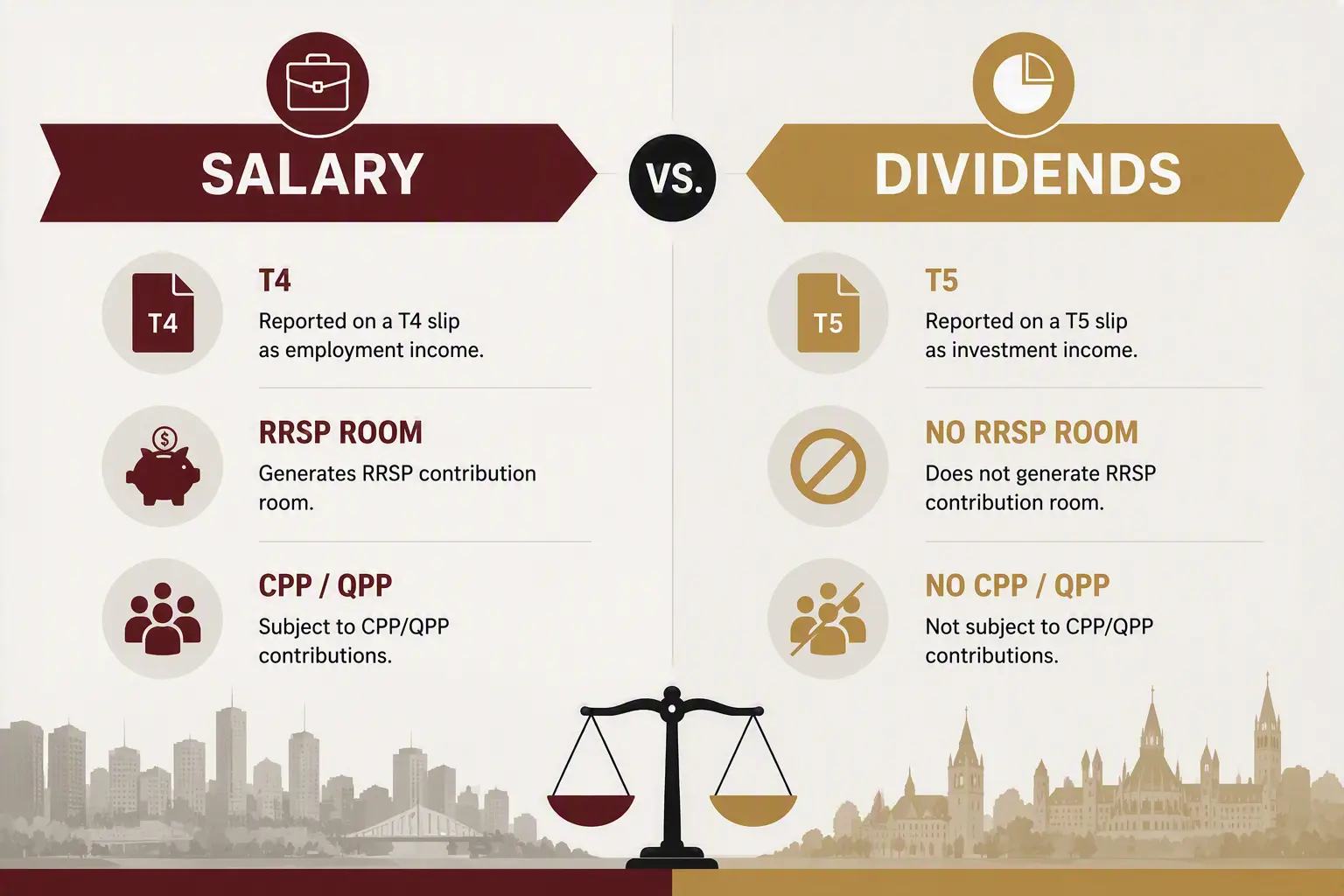
Once your corporation is operating, one important question follows: how should you pay yourself? The two main options are salary and dividends, and many owners use a tailored combination of both.
Salary – T4/RL-1(QC) Income
Salary is deductible to the corporation and creates earned income for RRSP purposes. It also generally results in CPP or QPP contributions. Salary can be useful where an owner wants RRSP room, pension benefits, or predictable employment income for a mortgage application.
Dividends – T5/RL-3(QC) Income
Dividends are paid from after-tax corporate profits and may receive dividend tax-credit treatment. They do not create RRSP contribution room and generally do not attract CPP or QPP contributions.
The Hybrid Approach and Why Annual Review Matters
The appropriate mix depends on your province, personal spending needs, corporate profit, RRSP plans, retirement goals, CPP or QPP preferences, and lending requirements. The answer can change from year to year, which is why remuneration planning should be reviewed before the fiscal year ends rather than after.
Practical Signs That You May Be Ready to Incorporate
Theory and tax rates only go so far. These signals do not guarantee that incorporation is right for you, but they are common patterns that suggest it is time for a serious conversation with a CPA.
Your profit exceeds what you need to live on
If you consistently earn more than you need to withdraw personally, the surplus may be available for reinvestment, debt repayment, working capital, or longer-term planning inside a corporation.
Your work exposes personal assets
Contracts, professional advice, trades, physical risks, or project-based work can create business liability. A corporate structure may provide an important additional layer of protection.
Growth is on the horizon
Bringing in a partner, pursuing financing, attracting investors, or planning an eventual sale is often easier to structure through a corporation that can issue shares and contract in its own name.
Your tax bill is climbing
A higher annual personal tax bill can indicate that your income profile has changed. It may be time to model whether a corporate structure would create a meaningful benefit after compliance costs.
You want to build wealth inside the business
Retained earnings, corporate investing, and future share-sale planning can create opportunities, but TOSI, passive-income rules, and LCGE qualification requirements make careful planning essential.
Incorporation is not an automatic tax-saving strategy. Its value depends on personal cash needs, business risk, growth plans, profitability, compliance costs, and the quality of the planning that supports it.
Making the Right Call for Your Business
The incorporation decision does not come with a universal answer. Whether it makes sense depends on your net income, the amount you need to withdraw each year, your province of residence, your liability exposure, and where you want the business to be in five years.
The corporate tax deferral opportunity can be valuable, but only if earnings can remain in the business. If most available profit must be withdrawn annually for personal expenses, the advantage can narrow quickly once accounting, legal, and corporate compliance costs are considered.
For entrepreneurs in the Ottawa–Gatineau region, provincial tax and filing differences make localized advice especially important. A personalized calculation is more useful than relying on any single income threshold or generic online recommendation.
Get a Clear Answer for Your Situation
LeBlanc Lacroix CPA provides bilingual, region-specific corporate and personal tax advice for entrepreneurs across Ottawa and Gatineau. We can model your numbers and help you determine whether incorporation makes practical sense this year.
Book a ConsultationThis article is general information only and is not legal or tax advice. Tax results depend on individual facts, applicable legislation, provincial rules, and administrative policies. Consult a qualified professional before incorporating or making remuneration decisions.
 English
  Français